



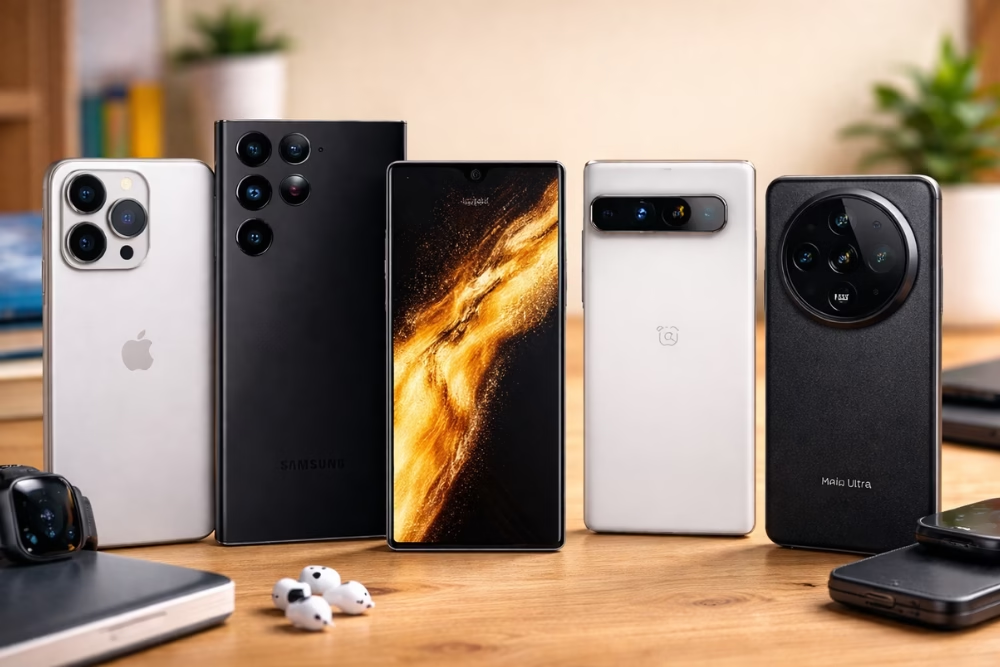
Smartphones play a key role in how people communicate, work, and stay connected. With many brands offering different features and price ranges, it can be difficult to know which companies truly lead the market. A few smartphone brands continue to stand out based on performance, popularity, and innovation. This article reviews the top smartphone brands in the world and explains what makes each brand successful in a highly competitive industry.
Top Smartphone Brands: An Overview
The global smartphone market is led by a few major brands known for strong technology and modern design. These companies influence market trends and shape what users expect from a smartphone. The top five major smartphone brands are:
- Apple: Renowned for its innovative design and seamless integration of hardware and software.
- Samsung: A leader in display technology and a pioneer in foldable smartphones.
- Huawei: Known for its cutting-edge technology and powerful camera systems.
- Xiaomi: A brand that combines high-quality features with affordability.
- Oppo: Gaining popularity through its camera innovations and fast charging technology.
These brands have built strong positions by improving their products, understanding users, and maintaining a loyal customer base.
How We Ranked the Smartphone Brands
Ranking the top smartphone brands involves looking at several factors beyond just sales numbers. Our ranking is based on the following factors:
- Innovation: The ability of a brand to introduce new technologies and useful features.
- Market Share: Global and regional sales figures that show how widely a brand is used.
- User Experience: Customer satisfaction, device durability, and after-sales support.
- Brand Loyalty: How likely customers are to stick with a brand based on past experiences.
- Quality and Design: The look, build quality, and overall value of the product.
This approach ensures that the rankings reflect both popularity and real user value.
Why These Smartphone Brands Stand Out
Each of these top smartphone brands stands out for different strengths in the market. For instance, Apple’s ecosystem offers a smooth user experience across its devices, which helps build strong brand loyalty. Samsung offers a wide range of smartphones for different budgets, showing its ability to innovate across price ranges. Huawei attracts users with its strong camera technology, which has helped the brand stand out in the market.
Xiaomi’s success comes from offering feature-rich phones at affordable prices without compromising on quality, while Oppo attracts users with its fast-charging technology and camera features. These brands succeed by focusing on innovation while meeting everyday user needs.
Challenges in the Smartphone Industry
The smartphone industry faces several challenges. Top brands compete fiercely, and it’s getting harder to make products clearly different. Privacy and data security remain important concerns for both users and companies.
Supply chain problems can slow production and affect availability, especially during global events. Brands must constantly update their tech to stay competitive, which can increase development and marketing costs.
Environmental concerns are pushing brands to use sustainable materials and processes, which takes time and money.
Brand 1: Overview and Features
Apple Inc., founded in 1976, revolutionized the smartphone industry with the release of its first iPhone in 2007. Apple is known for its ecosystem that connects laptops, phones, tablets, and accessories smoothly. Apple’s commitment to quality and innovation is further demonstrated by its proprietary operating system, iOS, which is known for its efficiency and security.
Apple’s innovation does not stop at software; it expands into hardware with each successive iPhone iteration, offering significant enhancements in camera technology, battery life, and processing power.
Brand 2: Overview and Features
Samsung Electronics is a major player in the smartphone industry, with its Galaxy series being one of the most recognized product lines worldwide.
Samsung’s strength lies in its innovative display technology. It has spearheaded developments in AMOLED screens, providing users with vibrant and sharp displays. Moreover, Samsung remains at the forefront of foldable technology with devices such as the Galaxy Z Fold series.
Samsung’s product versatility supports a wide variety of luxury and budget options, helping the brand establish a significant presence across diverse market segments.
Brand 3: Overview and Features
Huawei Technologies, founded in 1987, has faced major challenges but remains a strong competitor in the smartphone market. Known for its willingness to invest in advanced technologies, Huawei boasts some of the most competitive camera features in the industry, particularly with its P and Mate series.
Despite facing challenges in the global market due to geopolitical tensions and restrictions, Huawei continues to forge ahead with its proprietary software ecosystem and investments in 5G technology. This shows the brand’s focus on innovation and long-term growth.
Brand 4: Overview and Features
Xiaomi, founded in 2010, gained popularity by offering feature-rich smartphones at affordable prices. The brand emphasizes community-driven development to tailor its MIUI software based on user feedback, cultivating a loyal global customer base.
With rapidly growing market shares in regions like India and Europe, Xiaomi’s offerings encompass everything from budget to flagship devices. The Redmi and Mi series highlight the brand’s focus on useful features like long battery life and good display quality.
Brand 5: Overview and Features
Oppo, founded in 2004, has quickly gained popularity in the smartphone market through strong branding and innovative camera features. Oppo’s devices are known for their sleek design and user-friendly operating system.
The brand has improved charging speed with VOOC fast charging, which helps reduce overall charging time. Within key markets like India and China, Oppo’s focus on offering an optimized smartphone experience has allowed it to capture significant market shares.
Future Trends in Smartphones
The future of smartphones promises exciting developments as companies continue to tackle challenges and innovate. Ongoing development in foldable smartphones could change the way people use screens. Additionally, AI and machine learning will make smartphones more intuitive and personalized.
Moreover, advancements in 5G technology will further enhance connectivity and speed, transforming how users interact with digital content. Lastly, augmented reality technologies are likely to be increasingly embedded within smartphones, providing users with immersive experiences previously confined to specialized AR devices.
Conclusion
The smartphone industry is highly competitive, with major brands constantly innovating to meet changing user needs. Giants like Apple, Samsung, and Huawei continue to lead by example, while challengers like Xiaomi and Oppo are proving themselves formidable contenders, bringing strong competition through affordable pricing and user-focused features. More brands are likely to compete for market leadership in the coming years, but the clear winners will be those that balance innovation, user experience, and sustainability to keep pace with the future trends reshaping the industry.
